Little Turtle Summer Camp
Services
UI/UX
Brand Strategy
Client
LionDragon Studio Inc.
Tools
Figma, Illustrator, AfterEffects, Canva, Squarespace
Year
2025
Summary
LTSC is a grassroots summer camp platform designed to support Mandarin language learning through structured program discovery and registration access.
Info
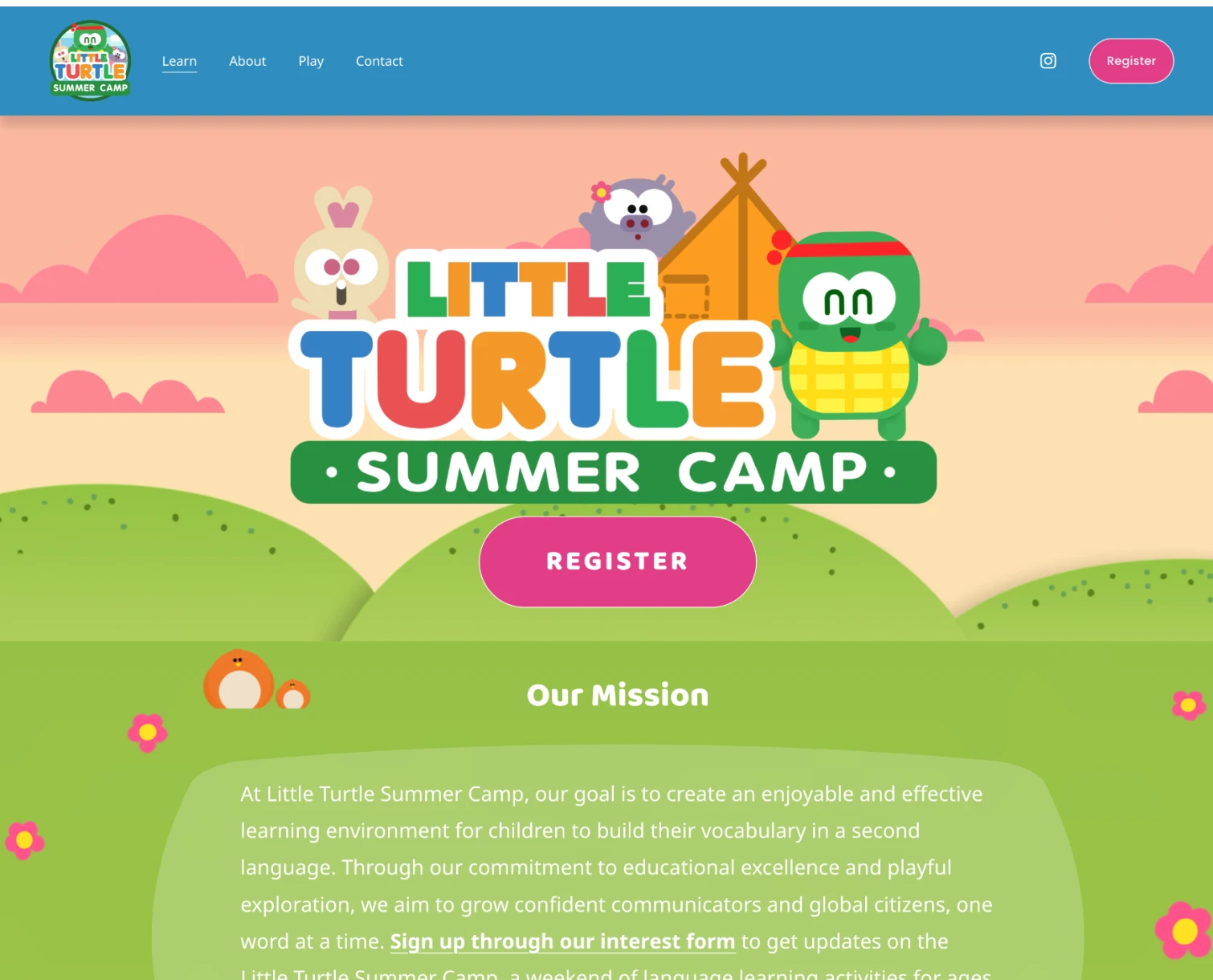
Web platform for a Mandarin-focused summer camp, translating an existing mobile app into a structured website experience with clear navigation and registration access. (Role: UI/UX designer; structured site architecture and implemented pages using a mix of custom and pre-made CMS assets.)
Case Study
Little Turtle Summer Camp is a grassroots summer camp platform inspired by the growing need for Mandarin language learning in a global economy. It is based on an existing Android and iOS app, Little Turtle Match, developed within the same organization.
Challenges
Working within early-stage constraints with limited documentation and minimal established product direction
Limited access to pre-built or consistent design assets, requiring adaptation and reconstruction of materials
No established research framework or prior usability testing to reference
Collaborating with a small team with minimal structured guidance or instruction
Key Implementations
Documented and structured product requirements, including core user flows such as registration, program navigation, and informational pages
Organized and standardized brand assets, adapting and modifying visuals to ensure consistency across the site
Developed information architecture for key website sections including homepage, registration, about, and program overview
Designed and implemented a navigable website structure supporting core user journeys (program discovery and enrollment)
Maintained brand consistency across digital touchpoints while translating app-based identity into a web environment
Supported development of an early-stage registration flow using external tools and embedded workflow elements
Overview
I collaborated closely with one other intern to define priorities and execution tasks through ongoing project documentation and iteration. We worked from existing Figma assets when available, and recreated or adapted visuals using Adobe Illustrator, Photoshop, and After Effects when necessary to maintain consistency and usability.
Although formal user research was not conducted, I evaluated common UX patterns in children’s summer camp and educational platforms, particularly around registration flows, program discovery, and informational hierarchy. These references informed structural decisions around navigation and content organization.
I also contributed to building a foundational design system by organizing fragmented assets into a structured Figma workspace, improving accessibility and reuse across the project.
My focus throughout the project was ensuring clarity of navigation and information structure, allowing users to easily understand program offerings and complete registration with minimal friction.